Craig and Sal Go Global
Pokhara, Nepal
December 15, 2012
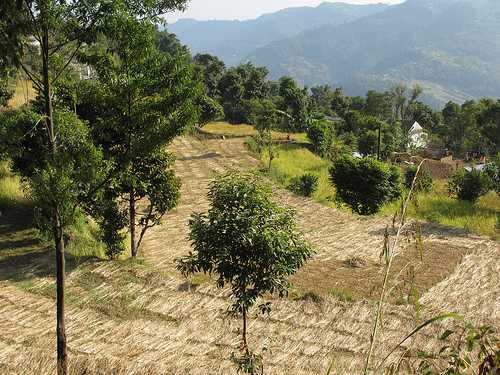
Travelling from Kathmandu to Pokhara on the bus is an experience. Despite the cities only being 200 km apart, the bus takes about seven hours. It’s easy to see why. The narrow roads wind their way through the hills and are a mix of potholed sealed and unsealed roads. Travelling by road is a great way to see some of rural life in Nepal. Most Nepali people make their living from agriculture, with many of Nepal’s poorest people barely growing enough food to live on (just 13% of the country’s agricultural output is traded). We saw lots of terraces cut into hillsides, ox-drawn ploughs and workers manually harvesting grain.
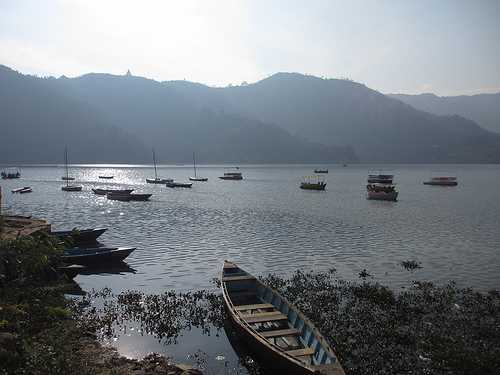
We stayed in Pokhara for a couple of days both before and after our trek. The Lakeside area of Pokhara is a very chilled out place where you can find plenty of tourists preparing or recovering from their treks. We let ourselves enjoy Pokhara’s touristy side which we have to admit wasn’t a particularly cultural experience.
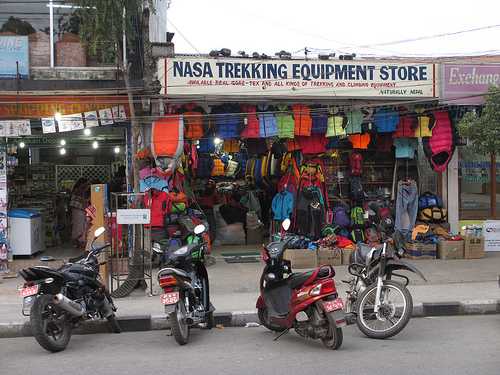 Who would’ve thought that NASA get their gear from Pokhara?
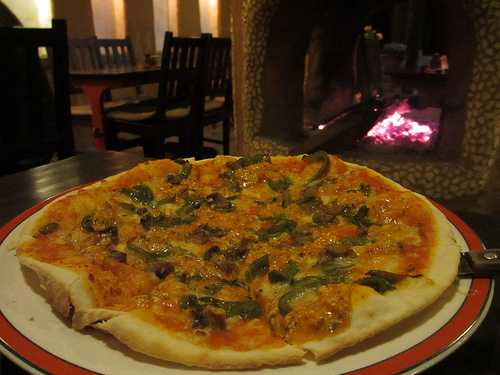
It was nice having cafés to sit in while catching up on some of our to-do list. A whole range of food is available here - both Western and Nepali. The food is delicious and very cheap. One night we decided to ‘splash out’ and paid about NZ$6 each for our meal and drinks. Even the fancy restaurants have a relaxed vibe and for once we fitted right in with our travel clothes.
Accommodation here is also very cheap. In the two guesthouses we stayed at we paid between NZ$7 and $10 per night for a room. Like Kathmandu, power cuts are frequent here. Guesthouses sometimes have timetables for when the load shedding will take place, so it’s important to time having your showers!
Pokhara was also the perfect place to get a post-trek massage. We chose to go to a place that employs blind Nepalese masseuses. Apparently, there are around 170,000 people in Nepal who are blind, and there is not always support available. We’ve noticed that any companies in Nepal that become popular with tourists or recognised in guidebooks attract copycats – we walked past another massage clinic in Lakeside that purportedly hires deaf and mute people!
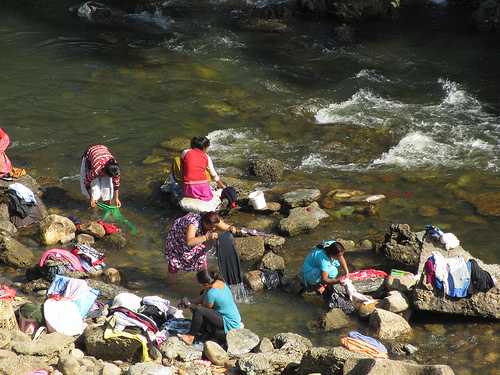
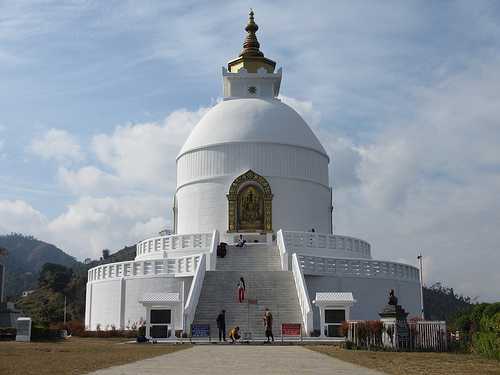
The rest of Pokhara is very different from the touristy Lakeside area. The trekking shops and hotels disappear and you can see where most locals are living. We wandered through some other neighbourhoods on our way to the Buddhist Peace Pagoda which sits overlooking the lake.
After having a few days after our trek to relax, we’re now feeling ready to make our way to India. We’re heading south through Lumbini in Nepal to cross the land border at Sunuali and head on to Varanasi.

Written by Craig Drayton and Sally Robertson